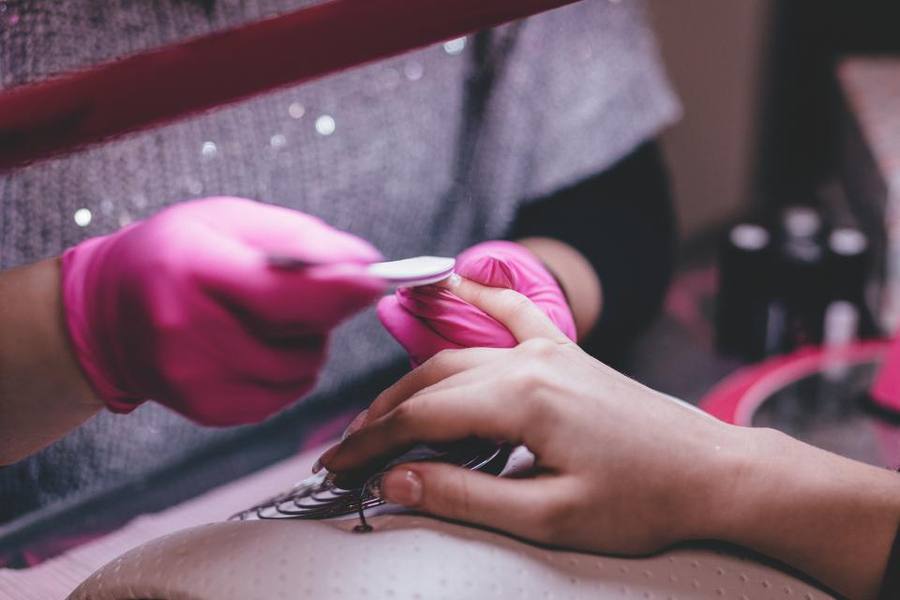
Representative image (stock photo); not the exact product.
Wavelength Must Match The Gel
Gel polishes contain photoinitiators that react to specific wavelengths, and a lamp emitting a different wavelength will not cure them properly.
A gel that appears dry on the surface but is uncured underneath is the common failure, and it lifts, peels and remains chemically active.
Using a lamp and gel from compatible systems, or checking the stated wavelength against the gel requirement, is what prevents it.
Dual wavelength lamps exist and cover a broader range of gel chemistries, which matters if you use products from several brands rather than one matched system. They are more forgiving, and they are not a licence to ignore what a given gel requires.
Uncured Gel Causes Allergy
The most significant risk with gel nails is developing an allergy to the uncured monomers, which can cause severe reactions and, once developed, is permanent.
That allergy is caused by uncured product touching skin — gel flooding the cuticle, product on the surrounding finger, or insufficient curing leaving active monomer.
Careful application away from skin, wiping any spills immediately, and curing fully for the specified time are what prevent it, and this is the most important thing in the category.
Curing Time And Layer Thickness
Thick layers do not cure through, leaving uncured product beneath a cured surface, which both fails and leaves active monomer against the nail.
Thin layers cured for the full specified time is the correct approach, and rushing either is what causes lifting and prolonged wear problems.
Curing time varies by product and by lamp, and using a shorter time because the surface looks set is a mistake with consequences beyond appearance.
Removal Damages Nails If Rushed
Gel must be soaked off with acetone rather than picked or peeled, and peeling removes layers of nail plate along with the gel.
That is the main cause of the thin, weak, damaged nails associated with gel polish, and it is a removal problem rather than a product problem.
Proper soaking takes time and patience, and anybody who will not do it properly should not use gel polish, since the damage accumulates with each removal.
Light Exposure And Skin
These lamps expose hands to light repeatedly, and while typical exposure is brief, applying sunscreen to hands beforehand or wearing fingerless gloves is a reasonable precaution.
Hands show sun damage readily and are already among the most exposed areas, so adding regular additional exposure is worth mitigating cheaply.
Anybody on photosensitising medication or with a history of skin cancer should discuss gel manicures with a doctor.
Lamp positioning also affects curing more than people expect, because nails at the edges of a lamp receive less light than those in the centre and the thumb is frequently cured separately for exactly that reason. A hand pushed too far in or held at an angle leaves some nails undercured while others are fine, which produces the puzzling result of one nail lifting within days while the rest last weeks.
The Verdict
An effective tool for gel systems where wavelength compatibility and complete curing matter more than any other specification.
Uncured monomer on skin causes a permanent allergy, peeling gel off damages nails, and repeated light exposure to hands is worth mitigating.
Keep gel off your skin and cure fully. Allergy to uncured monomer is permanent and is the genuinely serious risk here.
At a glance
Pros
- Cures gel systems quickly and reliably when matched correctly
- Long-lasting manicures compared to regular polish
- Fast curing times with modern LED lamps
- Consistent results once technique is established
Cons
- Wrong wavelength fails to cure the gel
- Uncured monomer on skin causes permanent allergy
- Peeling gel off damages the nail plate badly
- Repeated hand exposure to light
Frequently asked questions
Why does my gel lift or peel?
Usually incomplete curing — either the lamp wavelength does not match the gel, or layers were too thick to cure through, or curing time was cut short because the surface looked set. Thin layers, full time, matched system.
What is the serious risk?
Developing an allergy to uncured monomers, which can cause severe reactions and is permanent once developed. It comes from uncured product touching skin, so keep gel off the cuticle and surrounding finger and cure fully every time.
Can I peel it off?
No — peeling removes layers of nail plate with the gel, and that is the main cause of the thin damaged nails people associate with gel polish. Soak it off with acetone properly, however long that takes.
Specifications
| Type | LED gel curing lamp |
| Critical | Wavelength must match the gel system |
| Main risk | Permanent allergy to uncured monomer |
| Application | Thin layers, kept off skin |
| Curing | Full specified time, never shortened |
| Removal | Acetone soak; never peel |
| Skin protection | Sunscreen or fingerless gloves on hands |
| Seek advice | Photosensitising medication, skin cancer history |
The bottom line
Match the wavelength, keep gel off skin, cure fully, and never peel it off. The allergy risk is the serious one.
Check Price on Amazon